

May Season Studio Archives
by Gintare O.
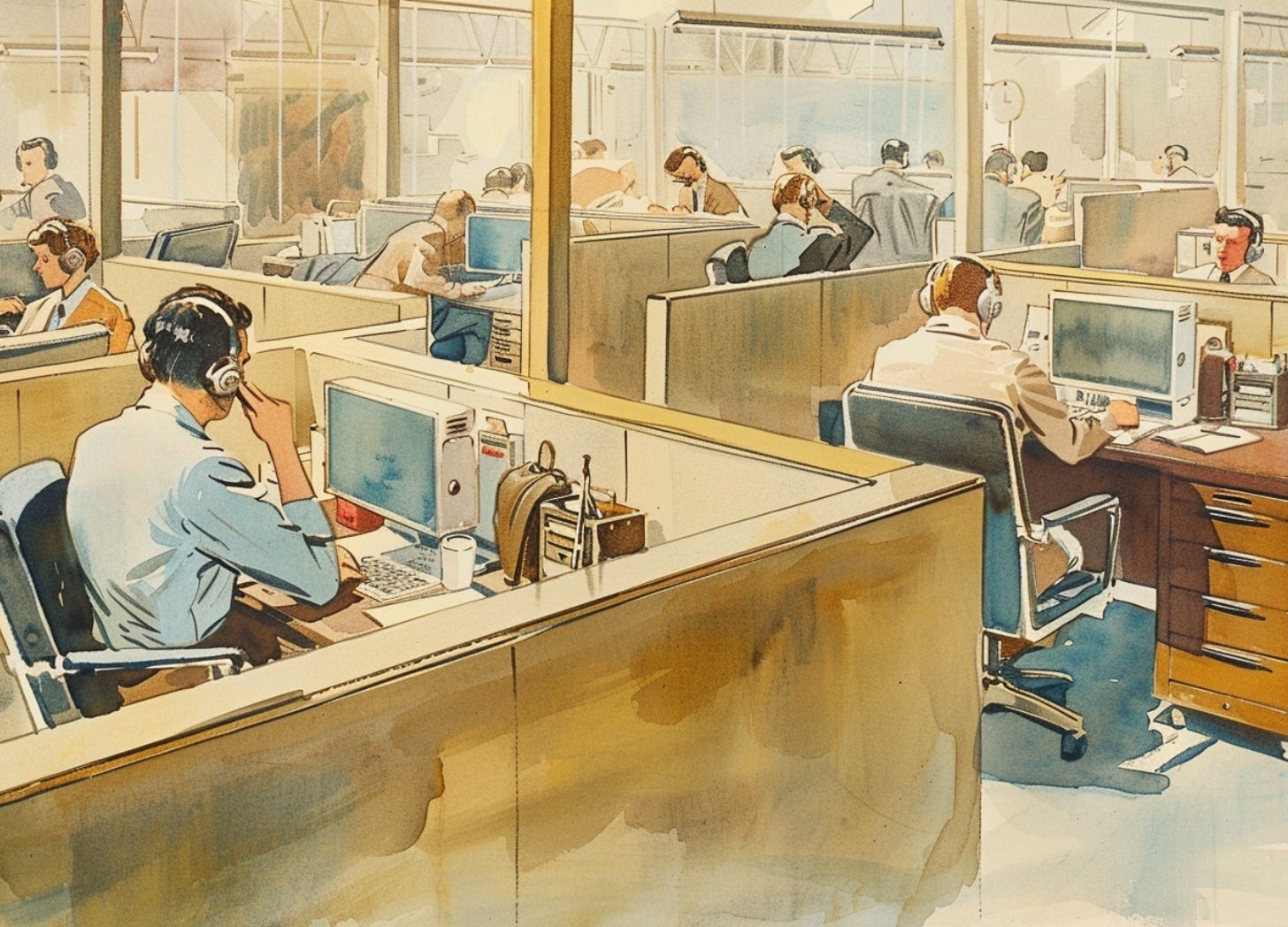
No one could agree on when Chad Reynolds started clipping his nails at work.
Some people claimed it had always been part of his routine, like coffee or checking LinkedIn between meetings. Others insisted it began after his promotion, when he moved from a shared pod to a semi-private cube with a better chair and worse acoustics. A few swore it started after his divorce, though no one could say why that would matter.
What everyone agreed on was that it was impossible to ignore.
The sound carried. Sharp and repetitive. Click. Click. Not loud enough to be confrontational, but loud enough to register. Loud enough to make you pause mid-thought and wonder if that really was what you were hearing.
Chad never muted himself.
He would be mid-sentence on a call, voice confident, casual in the way men get when they believe they are likable, when the sound would cut through the audio.
“—so if we ladder the messaging through retail partners,” click, “we can really own the seasonal narrative without confusing the consumer,” click, click.
No one ever said anything.
Not because it was acceptable. Because it was Chad.
Chad Reynolds, Director of Product Marketing, had been at May Season Studio for eight years. He was good at his job in the way that made him difficult to challenge. He hit targets. He spoke fluently in brand language. He remembered people’s names just well enough to make them feel seen, though not well enough to remember their boundaries.
Women on the floor did not like Chad.
Not for one specific reason. For several small ones. The way his eyes lingered half a second too long. The way he leaned in when he spoke, even when there was no need. The way compliments landed slightly off, like they had been workshopped somewhere private and brought out anyway.
Nothing reportable. Nothing concrete.
Just a low-level discomfort that accumulated.
The nail clipping felt like an extension of that. A quiet assumption that shared space belonged to him by default.
Facilities noticed first.
Not formally. Just as an observation exchanged during a routine walk-through.
“Is he… grooming himself?”
“I think so.”
“On calls?”
“Yeah.”
They shrugged. There was no policy against it. No debris issue. No sanitation violation. Just sound. Just presence.
Marketing noticed next.
People nearest Chad developed strategies. Noise-canceling headphones. Calendar blocks labeled “focus time” that coincidentally aligned with his recurring meetings. One woman started taking all her calls from the stairwell by the windows, citing better reception.
Someone posted in Slack:
does anyone else hear clippers or am I losing it
They deleted it thirty seconds later.
HR remained blissfully unaware.
Until Maribel.
Maribel Ortiz had been with MSS for just under four months. Her title was Associate Brand Compliance Analyst. Her cube sat two rows over from Chad’s, close enough that she could hear the clippers clearly, but far enough that no one thought to warn her.
Maribel was not human.
That wasn’t how anyone described her. It was just how things were arranged.
Her onboarding file listed her as fully compliant, non-disclosing, low accommodation need. She had completed training, signed acknowledgments, and passed health screenings that most employees barely skimmed. She did her work quietly and well.
Maribel trusted written rules.
In her experience, written rules were safer than social ones. Social rules shifted depending on who had power and who was tired of enforcing them.
MSS had a wellness initiative.
Everyone did.
Emails about balance. Posters about mindfulness. A page on the intranet titled Bringing Your Whole Self to Work that said a lot without saying much. It encouraged self-care during the workday “when appropriate.” It did not define appropriate.
Maribel read the policy carefully.
It did not prohibit personal care at desks.
Chad clipped his nails on calls.
Unmuted.
Unbothered.
No one stopped him.
Maribel assumed this meant something.
She waited. Observed. Confirmed the pattern.
On a Wednesday afternoon, during a routine brand alignment call, Maribel applied a hydrating face mask at her desk.
She muted herself.
That felt important.
The mask was pale green, thick, and cooling. It came from a brand sold in bulk through an MSS partner channel. She applied it carefully, using a small mirror she kept in her bag.
Across the aisle, someone noticed the movement.
They looked away. Then back again.
The mask caught the light. It made Maribel’s face reflective, unfamiliar. She remained focused on the call audio, nodding occasionally, typing notes.
Chad clipped his nails.
On Thursday, Maribel escalated.
The mask that day required removal. It loosened dead skin in thin sheets. Not messy. Just visible.
She waited until she was muted again. She peeled slowly, folding the material inward the way she had been taught. She placed it neatly into a tissue.
Someone stood up abruptly two rows away.
A chair scraped.
Chad paused his clipping and stared.
Not subtly.
Maribel felt it immediately. The attention. The wrongness of it. She did not look up.
During a Friday call that included two VPs and a guest from Finance, Chad clipped his nails loudly. Aggressively. He sounded distracted, like the meeting was happening around him instead of with him.
Maribel, relying on precedent, applied a new mask.
This one was different.
It was enzymatic. It reacted to air.
She did not anticipate the smell.
It wasn’t strong. Just sharp. Biological. Not unpleasant exactly, but undeniably body. The kind of smell that made people suddenly aware of themselves.
The call went quiet.
Someone cleared their throat.
Chad stopped clipping.
“Is… is someone eating?” a voice asked.
Maribel froze.
She checked her mute. Still muted.
She did not speak.
Chad laughed. “Probably someone’s lunch. Happens all the time.”
He resumed clipping.
The meeting ended early.
HR received four tickets within an hour.
None of them mentioned Chad by name.
Two mentioned “concerning personal grooming behavior.”
One described “facial shedding.”
One simply read: this cannot be allowed to continue.
HR scheduled a conversation.
They spoke to Maribel first.
The room was small. Neutral. Candy bowl untouched.
“We just want to understand your thought process,” HR said gently.
Maribel explained. The wellness policy. The lack of prohibition. Observed behavior. Consistency.
She did not accuse Chad. She did not name him.
HR asked whether she considered how others might feel.
“Compared to the nail clipping?” Maribel asked.
HR did not answer that.
They spoke to Chad later.
“That bothered people?” Chad said, genuinely surprised. “I mean, I’ve always done it.”
HR nodded. “Of course.”
“I didn’t realize anyone was watching.”
HR did not respond to that either.
Two weeks later, a new policy appeared.
Personal Care in Shared Workspaces: Clarification
Three pages. Carefully worded. Exhaustive.
Nail clipping was listed as discouraged.
Facial treatments were listed as inappropriate.
Biological maintenance beyond basic hygiene required private space.
There were diagrams.
There were examples.
There was a FAQ.
No one mentioned Maribel.
No one mentioned Chad.
Chad stopped clipping his nails at work.
Mostly.
Maribel followed the policy exactly.
She always did.
HR marked the issue resolved.
The floor returned to normal.
Which was to say, uncomfortable in quieter ways.
AUTHOR’S NOTE
Clarifications often appear when informal tolerance becomes visible. This entry documents how consistency was enforced not through confrontation, but through policy language that avoided naming anyone involved.
Resolution, in this case, was administrative.
written and designed by gintare okrzesik, creator of may season studio — a fictional corporation exploring beauty, bureaucracy, and quiet corruption through narrative design.
Filed under: Human Resources Policy Clarifications
More corporate chaos…

I have clipped my nails at work, however in defense, I worked in a building entirely by myself. I never did it while on the phone. So, I feel Chad, but no. Love Maribel, though. She's got cojones!