

May Season Studio Archives
by Gintare O.
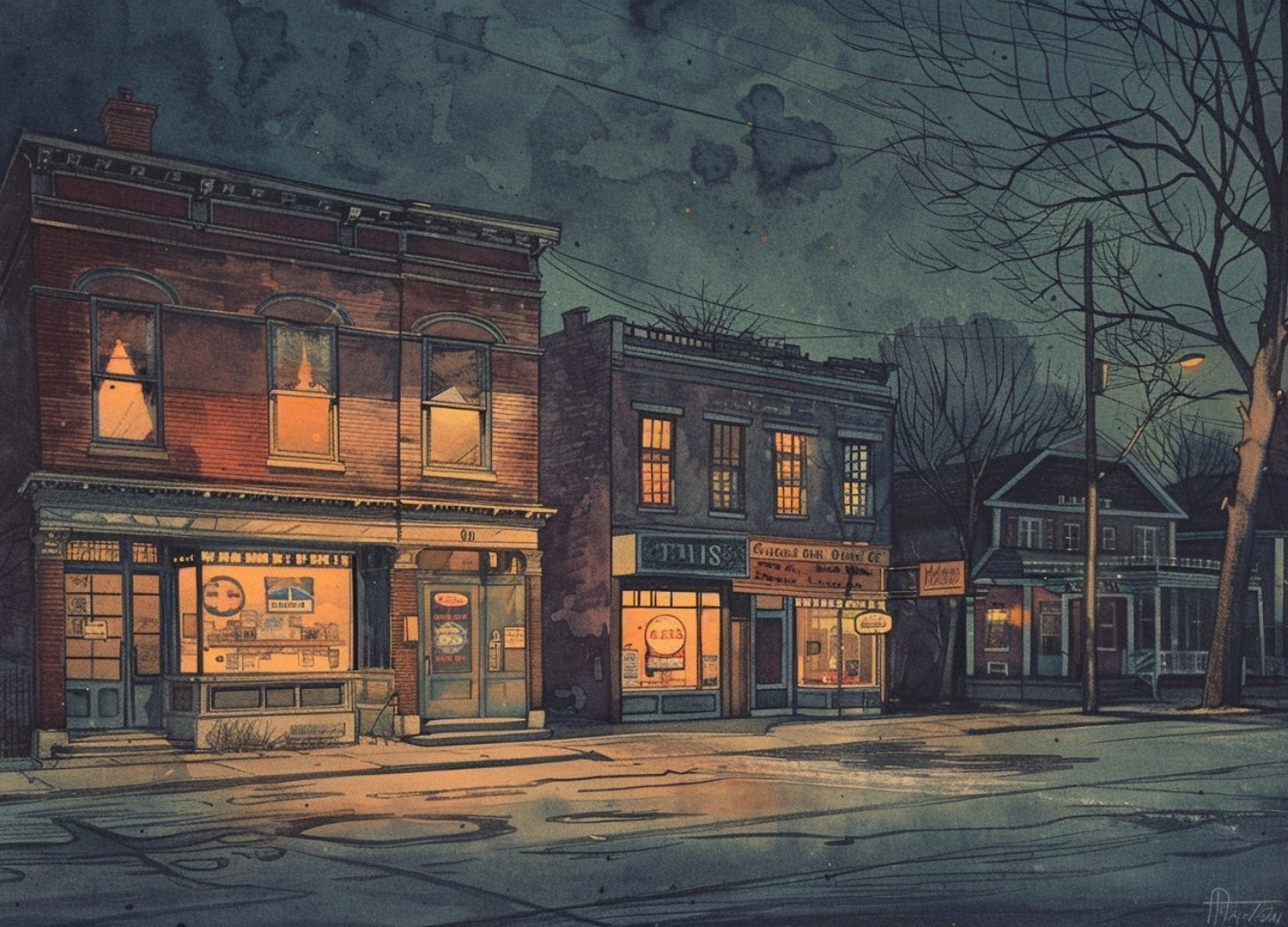
She lived upstairs, above a storefront that used to sell something useful and now sold nothing at all.
The sign was still bolted to the brick, sun-bleached and stubborn. The window display held dust and a single chipped mannequin hand that somebody had left behind like a joke. At street level, it looked abandoned. Up one flight, it was home.
The stairs were narrow and uneven, worn down in the middle from decades of feet that came home tired. The building smelled like old brick, damp wood, old cooking oil trapped in the walls, and whatever her neighbors made when they stopped pretending it was too late to eat. She liked it that way. It reminded her she wasn’t alone, even when she was.
She came back from Ashes with her shoulders set like she was still walking through a crowd.
Her shoes came off the second she shut the door. One landed upright by the mat. The other rolled and fell on its side like it had given up halfway through the day.
Her apartment was quiet in the way only old buildings were quiet. Not silent. Just humming softly to themselves. Pipes clicking. Heat knocking. Somebody’s bass line drifting up from below, muffled by plaster and time.
She never turned on the overhead light. She moved by memory, letting the streetlights do the work. Their orange glow slipped through her blinds in thin bars, catching on the edge of the counter, the corner of a framed photo she kept facedown, the glass on her coffee table that still had a ring of dried lemon.
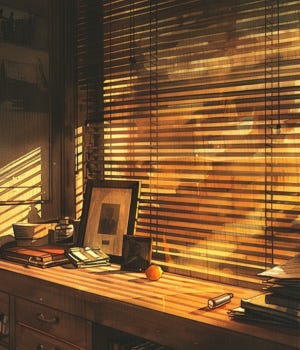
She dropped her bag by the couch and stood still for a moment, letting her ears adjust.
No footsteps in the hallway. No voices near her door. The building felt normal, which meant nothing. Normal was a thin layer. It peeled back easy.
She poured herself a drink she didn’t need, mostly because it gave her something to do with her hands. The liquor was cheap. It smelled like sweet chemicals and regret. She took a swallow anyway and let it burn down like a reset button.
Ashes had been busy. Friday crowd drifting in early, already loud, already familiar. The same men who tipped too much and expected that to mean something. The same women who watched each other like competition. The same arguments that started soft and ended sharp. She poured drinks, wiped down the bar, kept her face neutral. Smiled when it made the job easier. Ignored the rest.
She was good at being present without being available. Being seen without being chosen. It was a skill you could build in public-facing work, and she had been building it a long time.
The TV was on.
Muted. A lifestyle ad, bright kitchens, clean hands, smiling people who looked like they had never lived above a storefront. A slow pan over cream stone countertops, white cabinets, a set of linen napkins folded like a promise.
In the corner, a logo flickered.
May Season Studio.
She watched it without really seeing it. The images passed over her like weather. A calm lie, neatly packaged.
Her phone buzzed on the counter.
She didn’t look right away. She finished her drink first. Small delay. Not a game. A rhythm. Rushing ruined it.
When she finally picked up the phone, the screen was bright enough to make her blink.
You still up?
She stared at the message for a second longer than she needed to. She knew who it was. There was no one else who texted like that. No punctuation. No softness. Just a question that wasn’t really a question.
She set the phone down again and rinsed her glass slowly, the way she did when she wanted to pretend she had time.
A few minutes later, it buzzed again.
I’m nearby.
She smiled despite herself. Not happy. Not romantic. Just irritated in a way that meant he mattered.
“Of course you are,” she said to the empty apartment.
She typed with one hand.
Door’s open.
She regretted it immediately, which meant it was consistent.
He didn’t knock when he arrived.
He never did. The lock turned quietly, like he knew exactly how much pressure it took to keep it from sticking. The door closed behind him with care, the latch catching without a slam.
She didn’t turn around right away. She didn’t need to.
His steps were controlled, measured. He moved through her space like he didn’t bump into things, like the room adjusted around him instead of the other way around. Even in the dark, he navigated like he’d mapped the apartment once and never forgot.
“Long night,” he said.
“Always,” she replied.
He came up behind her and stopped close enough that she felt the change in the air. Not fear. Not excitement. Recognition. Something in her body acknowledging something in his before her brain had time to argue.
He reached past her for a glass and poured himself a drink without asking. He never asked. He didn’t need to. She hated that she didn’t stop him.
He took one sip like he was testing it for poison.
“You working tomorrow?” he asked.
“Double,” she said. “Unless something burns down.”
He smiled faintly. It didn’t reach his eyes. It never did.
If someone had seen him on the street, they would have assumed he belonged anywhere he stood. That was the problem with him. He looked like the world made room. He looked like he had never had to scramble for a shift, never had to deal with a landlord who “forgot” to fix the heat, never had to calculate groceries versus rent. He wasn’t polished, exactly. He wasn’t styled. He was just… correct. Like he’d been built that way and nobody had questioned the design.
She had once asked him what he was.
Not in those words. She had tried to make it casual. Half-joke. The kind of question you could pretend was about ancestry or a family background.
He had looked at her, and in the pause before he answered, she had felt the shape of the lie he could have used.
He didn’t.
“I’m federal,” he said instead.
It was not an answer. It was a boundary.
She didn’t ask again.
They didn’t talk much after that, which was normal. Words weren’t the point. They had done the part where they pretended this was something that needed definition. They had done the part where they agreed on nothing and kept showing up anyway.
Now it was just habit.
He followed her into the bedroom.
The window was cracked open. Cold air slipped in from the canal, carrying damp concrete and the faint metallic smell that always came up from the water at night. Somewhere below, a car went too fast. Music thumped. Bass heavy enough to vibrate the glass.
She kicked off the rest of her clothes without ceremony. He watched her the way he always did, like he was cataloging details for later. Like he didn’t trust memory, or like memory wasn’t always reliable.
She hated that, too. The way he watched like it was his job. The way she still wanted it anyway.
They didn’t rush.
They didn’t linger.
It was physical, familiar, efficient in the way things were when neither person was pretending it meant more than it did. When the risk was the point. When the boundary was the only honest part.
After, he lay on his back staring at the ceiling, one arm bent behind his head. She watched him from her side of the bed, tracing the lines of his face in the dim light. His skin held a faint sheen, like it reflected more light than it should. His hair fell the wrong way, too clean, too intentional. There was a symmetry to him that felt unfair.
He didn’t look tired.
He didn’t look like a man who had spent years losing sleep.
She had once asked him how old he was.
He had laughed and asked her why it mattered.
She had laughed too, like it didn’t.
It did.
The sirens started not long after.
At first they were distant. Easy to ignore. Lockport had sirens. Joliet had more. Noise traveled across the canal like gossip. Usually it didn’t mean anything.
Then they got closer.
The sound changed. More vehicles. Different pattern. Longer holds.
She sat up, pulling the sheet around herself. He was already moving.
That was the other thing. When his attention sharpened, it happened fast. Like a switch. Like a system waking up.
“That’s not normal,” she said.
He didn’t answer. He was at the window, pushing the blind aside just enough to look out.
Red and blue lights reflected off the brick buildings across the street. The bridge toward State Street glowed harshly under floodlights. She could hear voices now. Shouting. Disorganized. Urgent.
“What’s happening?” she asked.
He hesitated. Just a fraction of a second. Enough for her to notice.
“Something crossed where it shouldn’t have,” he said.
Her chest tightened. “Someone escaped?”
He nodded once.
“Statesville,” he added.
Of course.
Statesville sat like a bruise on the map. A place people referenced without explaining. The kind of institution that existed as proof that the state could still hold a body when it wanted to. Everyone in the area knew it. Everyone knew the rumors too. The ones that sounded like urban legend until you’d been awake at the wrong hour and seen someone in the wrong place.
She swung her legs over the side of the bed and stood, wrapping her arms around herself.
“You need to go,” she said.
He turned toward her then, really looked at her.
There was something in his expression she rarely saw. Something like regret. It surfaced and disappeared fast, like a reflection in water.
“Yes,” he said.
He dressed quickly. Precise. Efficient. The movements of someone used to stepping into chaos without making a show of it. This was his world. Not hers. He fit into moments like this the way she never could.
When he reached for his phone, the shift in him was immediate.
No hesitation. No scanning. Just alignment.
He held the screen low, angled away from the window, but not from her.
AGENT: confirm active alert status. location state street corridor. visual on floodlights, multiple units. advise.
The response came fast enough to feel rehearsed.
DISPATCH: ACTIVE. SUBJECT OUT. last confirmed movement near canal access points. avoid stairwells and enclosed verticals. subject exhibits concealment behavior.
He exhaled once through his nose. Quiet. Controlled.
AGENT: confirm restraints.
DISPATCH: restraints breached during transfer. uniform intact. assume improvised concealment. assume intelligence.
Another pause.
AGENT: confirm threat level.
This time the reply took longer.
DISPATCH: elevated. prior incidents indicate targeted behavior. not opportunistic. subject selects contact points. avoid solo engagement.
She didn’t like the word selects.
He typed again.
AGENT: any indication of civilian focus.
The cursor blinked.
DISPATCH: unclear. previous breaches involved proximity triggers. recommend shelter-in-place for non-registered personnel.
Non-registered.
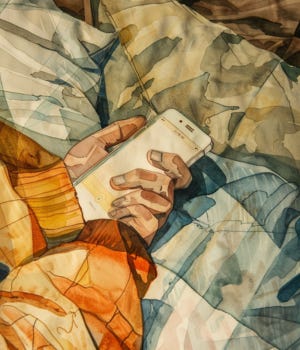
He didn’t say any of it out loud. He didn’t need to. The text exchange was a language between people who lived in the part of the world that required protocols.
She was not supposed to be reading it.
She was not supposed to know it existed.
It was part of why they couldn’t be what people wanted to call a relationship. It wasn’t just his job. It was his classification. His clearance. His blood.
She was the type of person who could pass most days as normal, as long as she stayed in her lane. As long as she didn’t get flagged. Half-breed was what people said when they were being cruel. Hybrid when they were trying to sound neutral. Mixed-lineage when HR wanted to keep the file tidy. None of the terms mattered. They all pointed to the same problem.
She did not belong on any official roster.
He did.
He was fully something. Fully what he was. Old enough that it showed up in the way he moved. In the way the air behaved around him. In the way his presence made other presences pay attention.
Not elf. Not fae. Not in words.
If you asked Dispatch, they’d use something dry. Category. Lineage. Subtype. A term that sounded like a project name.
If you asked people on the street, they’d say he had “that look.” Like he was too clean for the neighborhood. Like he made you feel watched without ever staring.
He locked the phone and slid it into his pocket.
“You should stay inside,” he said again, firmer this time. “Lock the door. Do not go out.”
“I have work,” she said automatically.
He looked at her the way he did when he was deciding what not to say.
“Today doesn’t count,” he replied.
Then he was gone.
She locked the door and leaned into it longer than necessary. The building pressed back, familiar, indifferent. Pipes knocked. Someone upstairs ran water. Normal things continued to perform their normal functions.
The sirens rose and fell.
Helicopter blades cut the air overhead, close enough to rattle the glass.
She sat on the couch with her knees pulled up and the TV on low. The news said nothing useful. The images repeated. The language stayed vague.
During a commercial break, May Season Studio appeared again.
Soft music. Clean lines. A woman sealing an envelope like it mattered.
The logo settled into the corner.
May Season Studio.
By morning, the noise was gone.
She slept in pieces and woke late, alone, irritated by the lingering smell of him in her sheets. She showered, dressed, poured bad coffee. The world outside looked clean, reset.
Her phone buzzed.
You okay?
She stared at the screen.
She typed back.
Still inside.
The response came immediately.
Good. Stay there.
She waited for more.
Nothing followed.
She stood in the kitchen longer than necessary, staring at the door. At the lock. At the familiar scuff near the frame where it sometimes stuck.
Normal meant moving.
She grabbed her bag.
At the door, she hesitated. Checked the lock out of habit. Turned it. Felt it catch.
The stairwell smelled like dust and old paint and something faintly metallic. The light flickered halfway down, as it always did. She took the steps carefully, one hand on the rail, the wood smooth from decades of use.
Halfway down, she checked her phone again.
No new messages.
At the bottom of the stairs, she slowed.
She didn’t know why at first. Just a subtle resistance. Like her body had decided something without consulting her.
The space at the base of the stairwell was narrow. Mailboxes along one wall. A door to the storefront on the other. The glass was dark, reflective, showing her own shape distorted by the angle.
That was when she noticed the shadow.
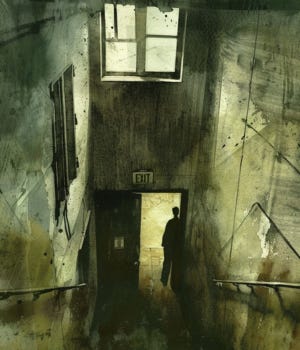
Too still.
Too deliberate.
He was standing just inside the angle of the wall, tucked close enough that the stairwell light didn’t quite reach him. The prison uniform blended into the concrete. Gray on gray. Intentional.
He hadn’t moved.
He had been waiting.
Her breath caught.
His wrists showed restraint marks. Raw. Red. Recently freed. The fabric at his collar was stretched, like it had been pulled over something that resisted.
He looked at her with focus, not surprise.
She stepped back.
Her heel hit the bottom stair.
Her bag slipped on her shoulder.
She opened her mouth.
He moved.
Not fast like a sprint.
Fast like a correction.
He closed the distance in a single step, hand clamping around her wrist with precise force. Pain flared sharp and immediate. Her body reacted before her thoughts did. She twisted, tried to pull free.
His grip adjusted instantly.
He leaned close.
Up close, he smelled wrong. Not sweat. Not dirt. Something antiseptic. Institutional. Like bleach soaked into concrete.
“You weren’t supposed to leave,” he said.
His voice was calm.
Certain.
His other hand came up.
Something flashed.
She felt the air shift, pressure changing in the narrow space. The building seemed to hold its breath.
Her phone slipped from her hand and clattered against the floor, screen lighting up briefly before skidding under the mailboxes.
Somewhere above them, a door opened and closed.
Footsteps passed.
Life continued, separated by a floor and a decision.
She tried to scream.
The stairwell swallowed the sound.
And whatever protocol had failed finally finished failing.
AUTHOR’S NOTE
Some locations don’t announce when they stop being neutral.
They keep the same doors, the same stairwells, the same habits. The change happens quietly, at the point where routine assumes it is still protected.
This account reflects a moment when proximity mattered more than intent, and when staying inside would have been enough. The failure was not dramatic. It followed procedure as long as it could, then ran out of space.
Certain streets remember things long after reports are closed.
written and designed by gintare okrzesik, creator of may season studio — a fictional corporation exploring beauty, bureaucracy, and quiet corruption through narrative design.
Filed under: May Season Studio Incident Accounts

This was a change up! Very well written.