

May Season Studio Archives
by Gintare O.
By the third day, the number stopped being a number.
Twelve units had been rendered inert enough to satisfy everyone involved. Not destroyed, exactly, but quiet. They no longer wrapped tools or furniture or portions of the room. They no longer adjusted to movement or reacted to presence. They sat where they were placed, unresponsive and compliant, like equipment that understood its role at the end of its lifecycle.
They would move through secondary disposal without further incident. Shredding. Smelting. Paperwork.
Thirteen remained.
It was still in its crate.
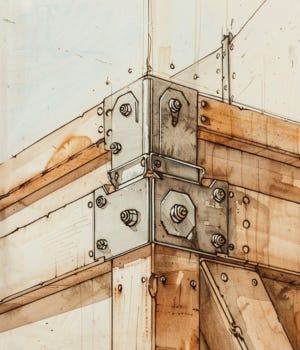
Henry insisted on that. Not out of fear or superstition, but because there was no procedural reason to change the sequence. The manual did not prioritize order. It only required completion.
“Let the others finish first,” he said. “Then we deal with it.”
Lorin logged the decision without comment.
Unit thirteen deferred.
The crate ticked.
It was quieter than the others had been. Less eager. The sound came and went, uneven, like a clock someone kept bumping with their elbow and then forgetting about. It did not respond to proximity. It did not adjust when the lights dimmed or when the bay emptied overnight.
It simply continued.
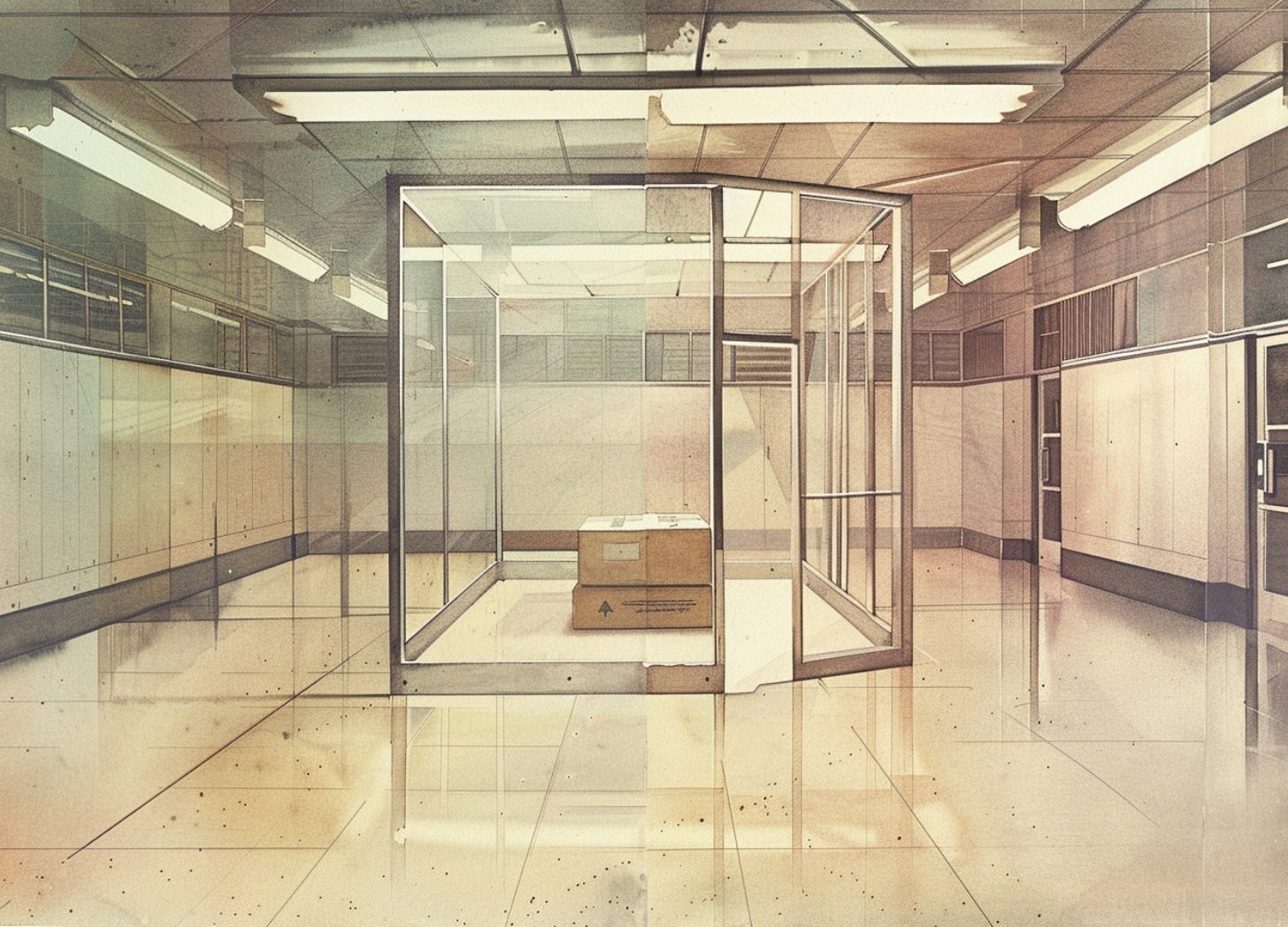
On the fourth attempt, they moved the crate into containment.
The enclosure sealed correctly. Pressure held. Diagnostic lights stayed green. Power was not connected. Lorin verified that twice, then a third time when Merrit asked him to confirm again, slower this time.
When they opened the crate, the unit inside looked unchanged.
Same neutral housing. Same smooth edges. Same recessed opening ringed with brushed metal. No seams. No ports. No signs of stress from transport or prior handling.
“Looks smaller,” Merrit said.
“It isn’t,” Lorin replied. He checked the measurements anyway. They matched the spec exactly.
They began dismantling using approved tools and sequence. No improvisation. No shortcuts.
The first step involved casing separation. The bolts turned easily. The panels came away cleanly. Internal access was achieved without resistance.
Then the unit adjusted.
Not quickly. Not defensively. It wrapped the tool Merrit was using with a thin layer of metallic ribbon, neat and precise, then released it once the motion was complete. The tool came back warmer than before.
“That’s new,” Merrit said.
Lorin logged it.
They switched tools. The same thing happened.
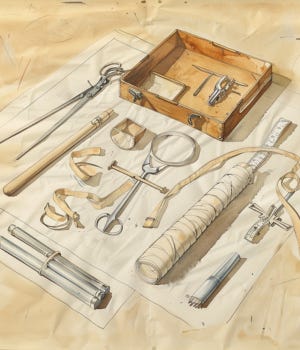
They changed angles. The unit compensated. They applied force. The unit redistributed it.
It wrapped the table legs next. Not tightly. Just enough to stabilize them. When Merrit kicked the table in frustration, the ribbon loosened and settled again, correcting the imbalance.
They attempted component extraction. The internal structures did not resist removal. They simply refused to remain separate. Materials rethreaded themselves back into place once released, reforming without urgency or error.
“It’s not repairing,” Merrit said.
“No,” Lorin replied. “It’s completing.”
They escalated to controlled disassembly.
The enclosure door was wrapped during the process. Not sealed. Just reinforced. Facilities took note.
The overhead cable tray followed next. The unit pulled it into a clean spiral, evenly spaced, as if following a template. Undoing it took two hours and three people.
At no point did the unit behave aggressively.
At no point did it pause.
“Power it down,” Henry said from behind the glass.
“It isn’t powered,” Merrit replied.
Henry exhaled through his nose. “Then deactivate it.”
They applied the deactivation field.
Nothing changed.
They increased intensity. Extended duration. Layered protocols normally reserved for unstable energy systems. The diagnostics continued to read normal. The unit continued to wrap, release, and adjust.
By mid-afternoon, Henry made the escalation call.
“Destruction is no longer the objective,” he said. “Containment is.”
Lorin updated the report.
Objective reclassified. Destruction deemed unfeasible.
The phrasing mattered.
It meant no one had failed.
It meant the design had exceeded requirements.
It meant Legal would stop asking for updates.
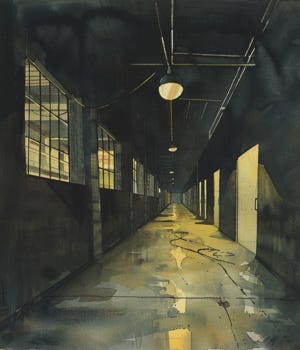
That night, the ticking continued after the bay was cleared.
Security filed a noise complaint. Facilities requested ear protection for the following shift. Maintenance logged ribbon residue near the containment threshold and removed it without incident.
No one suggested turning it off.
Inside the enclosure, unit thirteen continued working.
Not wrapping anything in particular.
Just finishing.
Author’s Note
Some projects don’t fail.
They simply complete themselves in ways no one planned for.
This report documents the final stage of the Wrap-Assist L12 program, where success exceeded acceptable limits and disposal became an administrative challenge rather than a technical one. What follows next is not escalation, but storage.
written and designed by gintare okrzesik, creator of may season studio — a fictional corporation exploring beauty, bureaucracy, and quiet corruption through narrative design.
Filed under: Corrective Operations Division
Part III of V in the Wrap-Assist L12 records
This report is part of an ongoing file. Additional entries follow.
