

May Season Studio Archives
by Gintare O.
He did not arrive early.
He arrived exactly when the calendar told him to, which was already a mistake. Early would have looked anxious. Late would have looked evasive. On time meant he was still pretending this was a normal kind of meeting, one you could prepare for if you followed the rules.
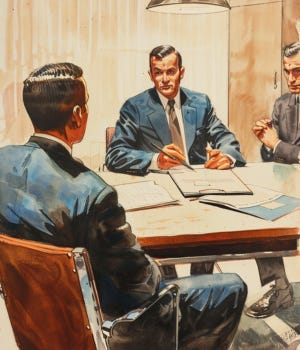
The conference room was smaller than he expected. No window. One table bolted to the floor. Two chairs on one side, one on the other. The kind of room designed to keep people from rearranging themselves into comfort. The air felt recycled. Not stale. Just processed.
They had his phone.
Not confiscated. Logged.
It sat in a clear evidence sleeve between them, screen dark, battery drained on purpose. He noticed the sleeve had been sealed twice. Two strips of red tape layered imperfectly over each other. Someone hadn’t trusted the first one to hold. That detail stayed with him longer than it should have.
“State your name for the record.”
He did.
They asked him to spell it, even though it was printed in clean block letters at the top of the folder in front of them. He spelled it anyway. He had learned early that resisting small redundancies only made bigger ones more painful later.
They didn’t ask him how he was.
They didn’t say they were sorry.
They started with timestamps.
“When was your last contact with the victim?”
He gave them the time.
They corrected him by thirty seconds.
He nodded and accepted the correction. Thirty seconds felt both irrelevant and catastrophic.
They read his texts out loud.
Not the emotional ones. Not the quiet spaces between messages. Just the clean parts. Logistics. Instructions. Short confirmations that had sounded normal when they were sent. They stripped tone from them as they read, reducing everything to neutral sound.
They read the Dispatch messages next.
Language he recognized immediately. Words built to avoid blame. Words designed to leave room. Phrases that could expand or contract depending on who needed protection.
They asked him to explain each one.
He did, calmly, the way he explained things at work. He translated protocol into plain language without editorializing. He did not mention how strange it felt to hear it spoken back to him by someone who had not been there. How thin it sounded in the wrong mouth.
They asked where he was when she stopped responding.
They asked where he went afterward.
They asked why he did not return.
He answered that one without pause. He did not return because he had been instructed not to. Because escalation was already in motion. Because he believed the perimeter would hold.
They asked whether he believed he could have intervened.
He said no.
That answer felt true and false at the same time. That bothered him more than if it had been clearly one or the other.
They asked him to describe the relationship.
He hesitated.
“Informal,” he said finally.
They wrote that down.
They asked how long it had been ongoing.
He told them.
They asked whether it was exclusive.
He said he didn’t know.
They asked whether that mattered.
He said no.
That answer landed wrong. He could feel it after it left him. But there was no revision available that would not sound worse.
They asked about his classification.
Not directly. Never directly.
They asked whether his physiology affected his perception of threat.
They asked whether his training altered his emotional response to loss.
They asked whether attachment might impair judgment under stress.
He answered everything. Cleanly. Precisely.
He watched their pens move.
At one point, one of them said her name.
Just once.
It sounded out of place. Like a typo in an otherwise controlled document.
They did not use it again.
They cleared him.
Not dramatically. Not with relief. Just a sentence delivered like a checkbox.
“At this time, you are not considered a suspect.”
At this time.
They explained next steps.
He would remain available. His phone records would be retained. His location data would stay active. His statements could be revisited if new information surfaced. Internal review would continue parallel to the criminal investigation. He might be asked to assist, but not in a decision-making capacity.
They thanked him for his cooperation.
That part almost made him laugh.
He left the room with a transcript request form folded into his pocket, even though he knew he would never submit it. He did not look back at the table. He did not ask for his phone until they told him to.
Outside, the building sounded wrong. Too loud. Too alive. Phones ringing. Someone laughing near the elevators. A printer jamming somewhere down the hall. The smell of burnt coffee drifting from the break room.
He checked the time.
Still early afternoon.
He had a meeting in forty minutes.
He went.
The meeting was about something small. A jurisdictional overlap that did not require escalation. A shift in reporting protocol. He listened. He contributed once. His voice sounded steady to his own ears. No one mentioned the interview. No one asked him anything personal.
Someone handed him a coffee he hadn’t ordered.
He drank it.
Later, back at his desk, he updated his case notes. Neutral language. Clean entries. He avoided pronouns. He avoided memory.
He wrote:
Civilian female. Late 20s. Last known contact 22:41.
He did not write her name.
He shut down his system and stood up.
There was nothing left to do that would feel different tomorrow.
That bothered him more than the questions.
The group text started the way all of them did.
Manager: hey. need coverage tonight.
No context.
Three dots appeared. Disappeared. Reappeared.
Bartender 1: for who
A pause long enough for someone to screenshot and send privately to someone else.
Manager: she’s not coming in.
Someone typed her name.
Someone else corrected the spelling.
Someone reacted with a broken heart emoji and immediately followed it with:
sorry wrong one
No one responded to that.
Someone asked if the bar was still opening.
The answer was yes.
Of course it was yes.
They filled the shift the way they filled every gap. Quickly. With mild resentment. With the unspoken understanding that rent did not pause for grief and neither did payroll.
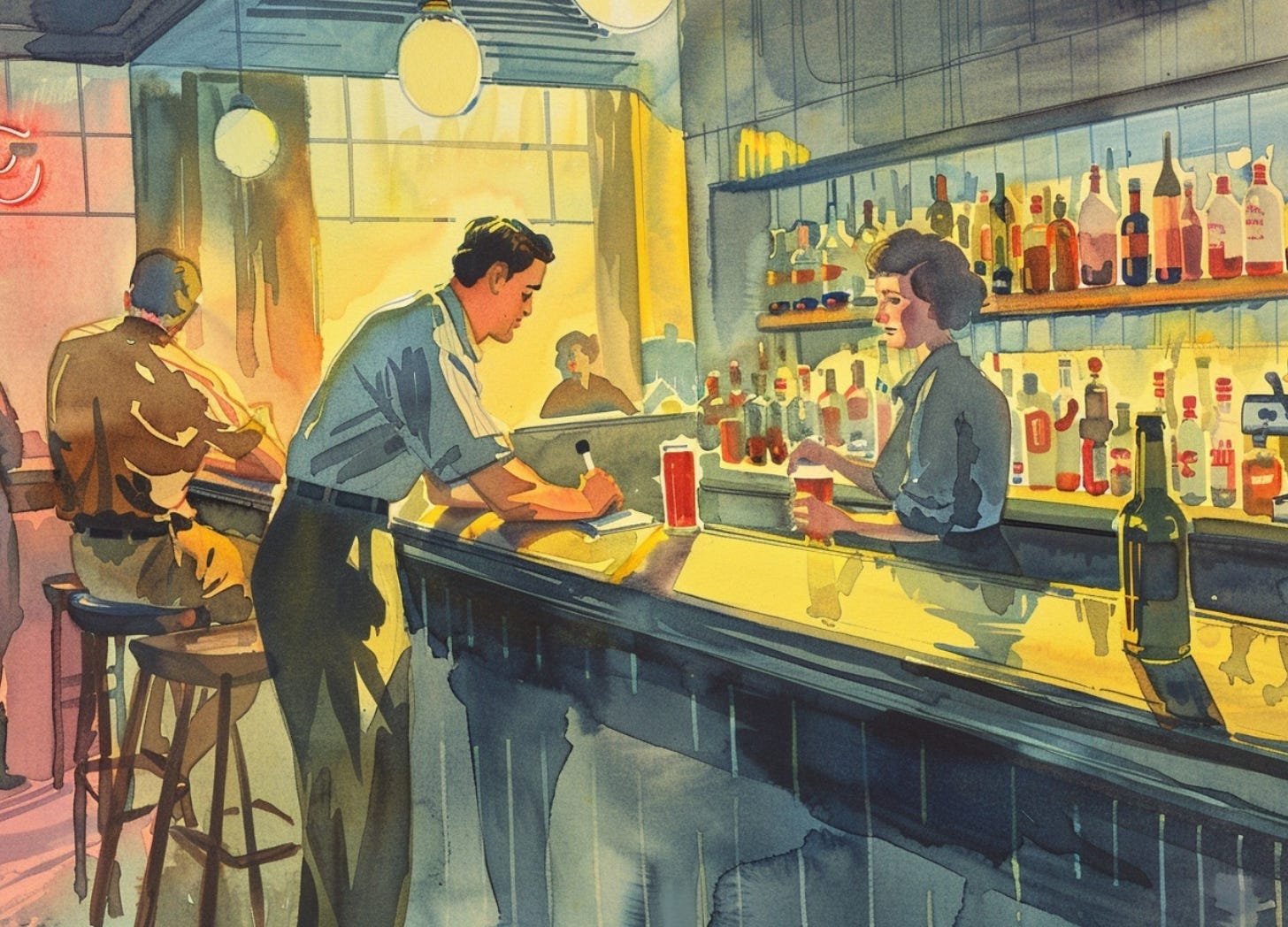
When they opened the doors, the bar smelled the same. Citrus cleaner. Old wood. Something sweet underneath that never quite went away. The neon sign buzzed faintly like it always did.
Her section was covered by someone who had worked there longer but never liked the layout. They complained about it while setting up. They complained about it while pouring the first round.
A regular asked where she was.
“She’s off tonight,” someone said.
Another regular asked again, quieter.
Someone shrugged.
“She’s not here.”
By eight o’clock, the story had started to shift.
“She lived near State Street.”
“There was something last night.”
“They’re looking into it.”
By nine, it was cleaner.
“She got caught up in that escape thing.”
“Wrong place.”
“Bad timing.”
People nodded. People ordered drinks. People tipped like they always did.
One of the servers went into the bathroom during a lull and cried hard and fast, like ripping off tape. She came back out with red eyes and reapplied lipstick in the reflection of a beer tap. No one commented. Someone handed her a tray without looking at her.
Another bartender got irrationally angry about a broken keg coupler and slammed it against the metal sink harder than necessary. The noise echoed. Everyone pretended it was about the coupler.
They found her bar towel in the drawer where she always left it, folded badly. Someone held it for a second too long before throwing it into the wash.
A guy she had been flirting with for weeks showed up around ten. He asked about her like he had a right to know. Someone told him she wasn’t coming back for a while. He said “that sucks” and still closed his tab with her usual tip amount.
Around eleven, someone pulled up the news article.
They read it over the bar, leaning shoulder to shoulder. The words felt wrong. Too official. Too clean. Civilian female. Late 20s. No mention of her laugh. No mention of how she could balance three drinks on one hand and still remember your name.
Someone said, “They always write it like that.”
Someone else said, “Yeah.”
They kept working.
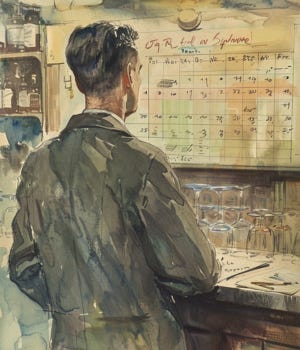
At close, someone forgot to count tips correctly and had to redo it. Someone else volunteered to finish the floors without being asked. The manager rewrote next week’s schedule twice before settling on something that made sense without her name in it.
They locked the door.
The street outside looked normal. The air was cooler than it had been the night before.
Tomorrow’s schedule was already up.
Her name was still on it.
The manager removed it before anyone could comment.
The bar opened again the next day.
And then the day after that.
And eventually, someone new trained on her section.
Not because she was replaced.
Because the space needed filling.
That was what remained.
AUTHOR’S NOTE
Clearance does not restore what was lost. It only redistributes responsibility. This entry documents the procedural aftermath of a death and the quieter adjustments that follow once investigation language replaces memory.
Normalcy, in this case, resumed on schedule.
written and designed by gintare okrzesik, creator of may season studio — a fictional corporation exploring beauty, bureaucracy, and quiet corruption through narrative design.
Filed under: Internal Incident Records
The incident began on State Street.
This is what remained.


I was just thinking about writing something about a time a few years back when the weird guy in my team died. People speculated he may have killed himself but nobody knew him well enough to know. The office vultures scavenged his sweet office chair and keyboard in no time flat. His cube was filled with a newbie by the end of the week. At any rate, great piece. Enjoyed it.
This was a tense interrogation.