

May Season Studio Archives
by Gintare O.
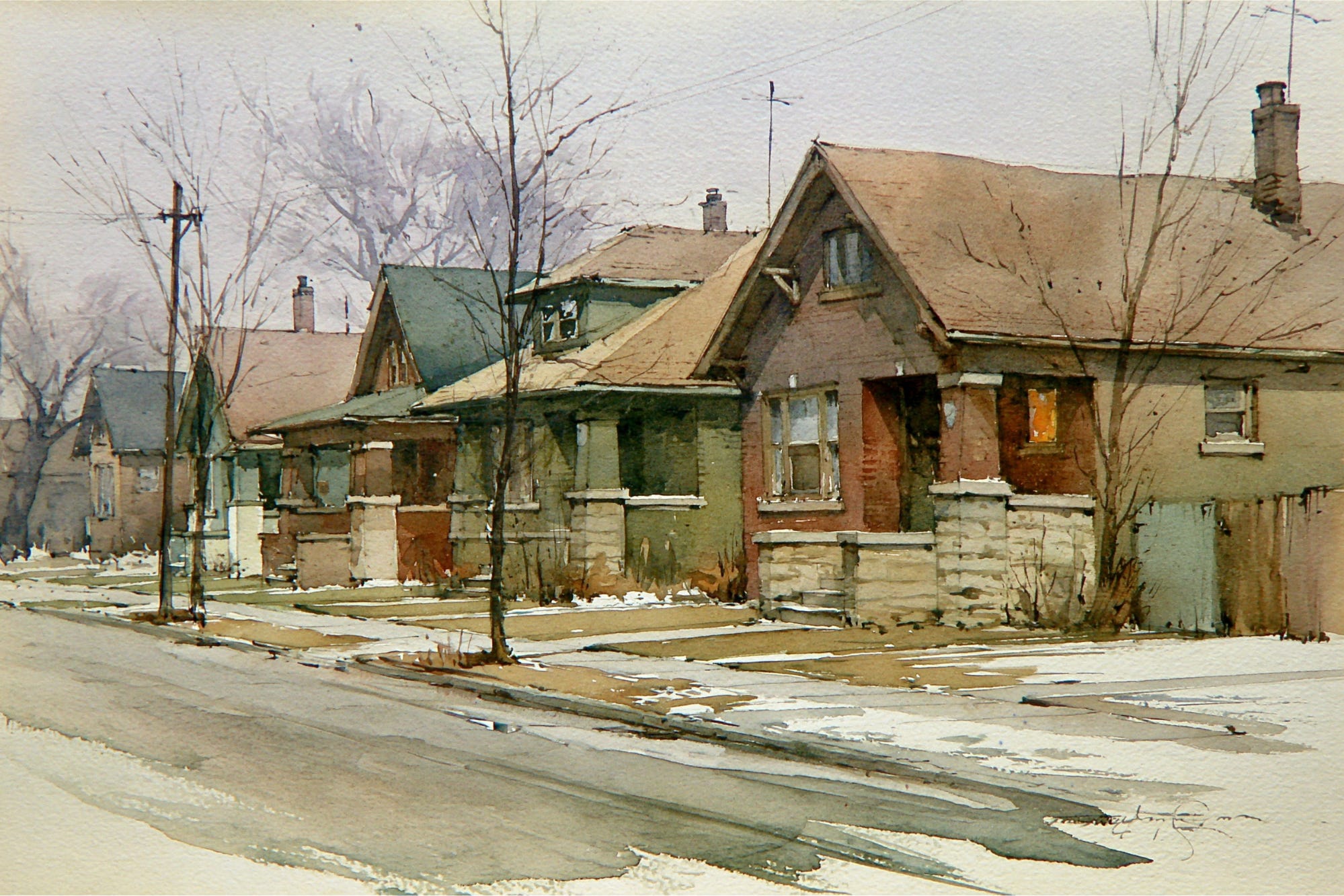
Dinah Kovar had run four hundred of these and could read a house in an afternoon.
It was a skill and she did not think of it as one. You walked the rooms and the rooms told you. The shoes told you how far someone had walked in the last ten years. The kitchen told you whether anyone else ate there. The photographs told you when the life had been busiest, because the busy years were the years nobody took pictures. By the second day she could usually say more about a person than their family could, which she had learned not to mention, because it upset them.
Ruth Ellery, eighty-eight, had lived in the house forty-six years. She had taught fourth grade at a school two miles away. Her husband had died in the nineties and she had not remarried and had not moved and had not, from the look of the second bedroom, ever considered doing anything else with it. She read. She had a chair with a lamp behind it and a rut in the carpet where the chair had been for decades. She kept a garden until she could not, and then she kept a smaller one.
The house read clean. Dinah priced it in a day and a half.

She found the soap on the second afternoon.
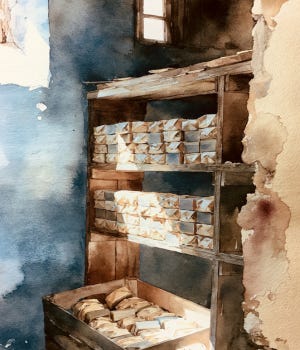
It was not a hoard. That was the first thing she noted, because she had seen hoards, and this was not that. There was no stockpiling, no panic, no wall of the same thing bought in a bad year. There was soap in the bathroom cabinet, which was normal. There was soap in the linen closet, three bars, which was normal. There was soap on a basement shelf, in a wooden crate that had been sized for it at some point by somebody, and the crate held maybe two years’ worth, and it was arranged by date.
All of it was Halloran.
The bars in the cabinet were current. The bars in the linen closet were from the last few seasons. The bars in the basement went back. Dinah pulled one out of the wrap far enough to read the stamp and put it back. Some of the scents on the labels were not scents she had ever seen in a store. The vessels, the refillable ones, were stacked on the shelf below, and she counted four different manufacturing generations of them and they were all, allowing for the printing, the same shape.
On the shelf beside the crate was a shoebox of delivery slips.
Dinah went through it because that was the job. Paper had to be sorted, shredded, or thrown. The slips were in order, oldest at the bottom, and there were a great many of them, and they ran back forty-six years without a gap. One address. One product line. Same cadence, the whole way.
She priced the soap as a lot and the crate separately and did not think about it again.
The collector came at seven forty on Saturday, twenty minutes before the sale opened, which happened, and which Dinah usually turned away.
His name was Martin Sedlak. He was maybe sixty, in a good coat, extremely polite. He said he had seen the listing photograph. He said the photograph showed the bathroom, and that the cabinet door in the photograph was open about four inches, and that four inches had been enough.
Dinah let him in, which she would think about later.
He did not ask where the bathroom was. He went to it. He opened the cabinet and made a small sound and then he was very quiet for a while, and when Dinah came to check on him he had three bars laid out on the edge of the sink in an order that meant something to him.
“This one is from before the reformulation of the wrap,” he said. “Not the soap. The wrap. Nineteen eighty-eight or eighty-nine. See the seam.” He turned it. “The soap never reformulated. That is the entire point of the soap.”
Dinah said the basement had more.
She watched him go down the stairs and she watched him find the crate and she watched a sixty-year-old man in a good coat sit down on a concrete floor.
He knew the scents. He named them off the labels before he read the labels, and he was right every time, and Dinah checked. He knew which years the vessel changed and what changed about it, which was nothing, he said, that was the thing, four redesigns of the printing on a shape that had not moved a millimeter in a century. He knew the company had never named its supplier. He knew the formula had not changed since nineteen four. He said all of this the way a man recites a thing he has recited before to people who did not want to hear it.
“You know why they can’t change it,” he said.
Dinah said she did not.
“There’s a contract,” Sedlak said. “It’s not a trade secret. A trade secret you can change, you just don’t. This one they cannot. It’s above the company. It’s older than the company, and every part of it is a rule about not telling anyone.” He was holding a bar in each hand. “Now ask yourself what kind of organization has a formula it is not permitted to alter, a supplier it is not permitted to name, a vessel it is not permitted to redraw, employees who will not discuss any of it, and customers who buy the same thing for fifty years and never once try anything else.”
Dinah asked what kind.
“The kind that isn’t a soap company,” Sedlak said. “I’ve been at this eleven years. I’ve found six houses like this one. Six. Always a woman, always alone, always decades of it, always the receipts in a box because they keep the receipts, they all keep the receipts. That’s not consumer behavior. That’s observance.” He looked up at her from the floor. “Did she work for them?”
The nephew was upstairs. Dinah went and got him.
The nephew was forty-something and had inherited a house he had been inside maybe thirty times, at holidays, as a child and then not as a child. He said no. He said his aunt taught fourth grade for thirty-one years and then she was retired for twenty-five and that was the whole of it. He said it a little defensively, because a man in a good coat was sitting on his aunt’s basement floor asking whether she had belonged to something.
“That’s what they all say,” Sedlak said, pleasantly.
Dinah asked the nephew, later, when Sedlak was upstairs with the vessels, why his aunt had used the same soap for forty-six years.
The nephew thought about it in the way people think about a question they have never once been asked.
“I think she liked it,” he said.
Sedlak bought all of it. The crate, the cabinet, the linen closet, the vessels, at a price Dinah felt bad about and he did not. He photographed the shoebox and did not want the shoebox. Receipts were not what he was after. Receipts were paper. He wanted the objects, and he carried them out to a clean car in two trips, and he thanked her four times, and he gave her a card and asked her to call him if she ever saw another house like this one, and she said she would.
The house went empty by Sunday evening the way they all do.
Dinah stayed to clear the paper, which was the last thing and the worst thing and the part nobody ever wanted. She sat on the floor of the emptied basement with the shoebox and started sorting, and she had by then spent three days inside Ruth Ellery’s handwriting. It was on the grocery lists in the kitchen drawer. It was in the address book. It was on the backs of the photographs, in pencil, the names and the years. It was on the tax folders and the garden notes and a recipe card for a coffee cake. Dinah knew that hand the way you know a hand after three days, which is completely.
The delivery slips were signed on receipt. Every one of them. Forty-six years of them.
The signature was not Ruth Ellery’s handwriting.
Dinah went back through the box, from the bottom, from the beginning, and it was the same signature on every slip, the first one and the last one and all of them in between, and it did not change the way a hand changes across forty-six years, and it was not her hand, and it was not four different hands, and it was not the hand of a delivery driver signing off, because the driver’s line was blank on every slip and had always been blank.
It was one hand. It was the same hand. It was somebody’s.
Dinah put the box in the shred pile.
She took one slip out first, the oldest one, from the bottom, and folded it once and put it in her jacket, and she did not put it on the inventory, and she did not photograph it, and she did not call the number on Martin Sedlak’s card, then or later.
She finished the paper. She locked the house. She had another one Tuesday.
AUTHOR’S NOTE
at may season studio, we are grateful for our long-term customers. many households have used the same bar for decades, and every delivery is signed for. the company considers this a sign of satisfaction.
written and designed by gintare okrzesik, creator of may season studio. a fictional corporation exploring beauty, bureaucracy, and quiet corruption through narrative design.
filed under: customer records / from the may season studio employee files
RECOMMENDATIONS
Six houses in eleven years. The product line is easier to find than the customers.
Begin with:


I'm trying to figure out what Martin Sedlak is up to. Private investigator? Curious person? Weirdo? Why take the cabinet? So many questions.
Beatifully written