

May Season Studio Archives
by Gintare O.
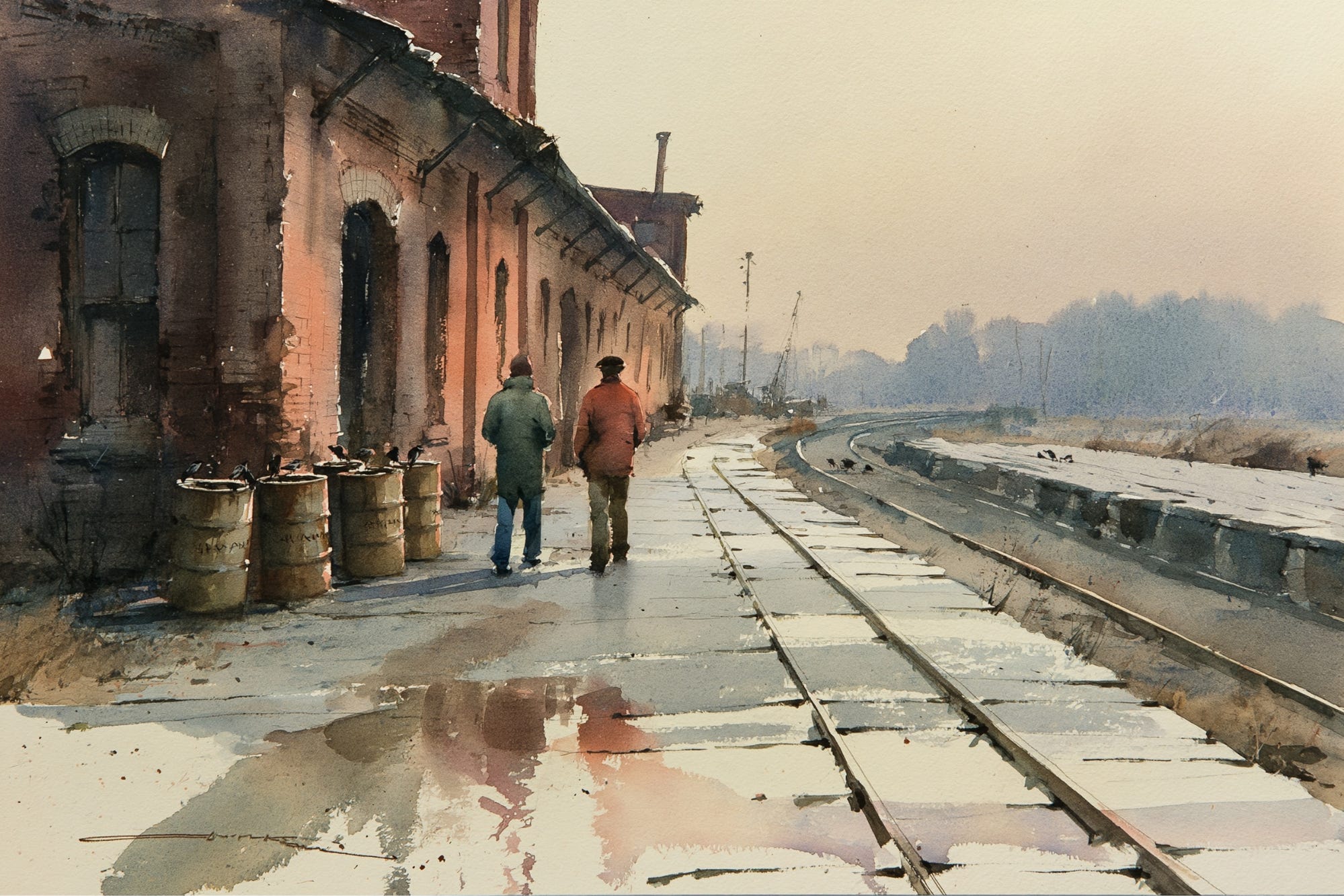
The clay arrives on the train once every three months and no one working on the railroad docks was alive when it began. Every three months, like clockwork. It just arrives and nobody questions it.
The volume is the only part that has ever changed. More soap sold means more clay ordered, or received anyway, since nobody on the dock has ever seen the order itself. Every bar the company ships, every scent, all of it comes down to the same base, and the base comes down to whatever is in those barrels. The car got fuller over the years. That was the whole story of the arrangement, as far as anyone on the dock could tell it.
Walter Reese had the job for thirty-one years. His retirement landed at the end of a quarter, which meant that for the first time in those thirty-one years, somebody stood next to him on the dock waiting for the car. Priya Anand. Twenty-six. Hired three weeks earlier off a posting that read “receiving associate, materials, overnight” and stopped there. She’d asked in her second week what the materials were. The answer she got was that she’d be trained on the standing order. She asked what the standing order was. You’ll see, Walter said.
They were there before dawn. Walter hated being late, even though officially they could never be late. Since the shipment wasn’t on the schedule. The rail ran behind the old brick freight house, one of the original builds on the campus.
The barrels were unmarked. Pale grey-brown at the seams where the wrap fell short. Walter looked at them and said the color was right.
How do you know the color’s right, Priya asked.
Thirty-one years of the same color, he said. And one time it wasn’t. Half a shade off, years ago. He flagged it, and somebody from upstairs was standing on the dock inside of an hour, and the barrels went back on the car, and eleven days later a corrected shipment arrived. What the difference was, nobody told him. He didn’t ask. He was not sure, saying it out loud now, whether not asking had been a decision or just something that happened to him.
“You log it by hand,” he said. He had a clipboard. Paper form, one Priya had never seen in any of the building’s systems, because it isn’t in any of them. “Not the terminal. The terminal’s got no field for it. This sheet, then the sheet goes in the gray binder, binder goes in the bottom drawer. Once a quarter somebody comes down from upstairs, takes the sheet, brings the binder back. You don’t copy it. You don’t photograph it. You write it once.”
“There has to be a PO. A vendor.”
“There’s a freight code.” Six characters. Not shaped like any vendor code she’d learned in training. Those all start with a division prefix. This started with nothing she could place. “Doesn’t map to a vendor. I checked, my first year. Procurement told me the code was valid and to quit asking what it mapped to. A valid code is a valid code, is what they said. And look, they weren’t wrong. Thirty-one years it’s worked. Worked for the man who trained me. Same code the whole way back.”
The barrels came off the train in order. Sequenced by weight, heaviest last. The third one needs to be handled with care, the rest just set them down till you are done.
One manifest. A single sheet taped to the lead barrel. A quantity, in a unit she didn’t know. The code. That’s it. No weight listed, and the barrels obviously weighed something. No origin, no carrier, no DOT number, and every other manifest in the building has all three plus a printed name on the signature line. Here the signature line was blank. Almost blank. There was a word in it, faint the way a stamp gets when the same stamp hits the same line on the same form for longer than ink is supposed to last.
What’s that say, she asked.
He didn’t look over. Never could read it either, he said. Quit trying around year four. Same word on every sheet as far back as the binder goes, and the binder goes back further than the company’s been called what it’s called now. Log the code. Leave that line alone. Don’t clean it up.
The car left, no sound. No crew or engine. Priya set one of the barrels down and turned to ask something, and the car was just gone.
More barrels than there used to be. Walter mentioned it while he coiled the tape. A handful a quarter when he started. Two trips with the jack now. The shipment grew because the business grew, that part made ordinary sense. The part that didn’t: same kind of car. Same spur. Same one-page manifest with the same worn-out word on it, wanting nothing, declaring nothing, bigger in exactly one number.
“Last thing. Cure room, third floor, before end of shift. Not the materials cage, the cure room. Badge in, set them inside the painted line, badge out. Don’t stay in there.” He paused on it. “There’s a chair in the corner of that room. Been there longer than me. You don’t sit in it. I don’t know who it’s for. It isn’t for us.”
She wrote the code in the binder and put the binder in the drawer. And she’d thought about it, out there with the spur empty, taking a picture of that faded word. Not to do anything with it. To read it later in decent light, that’s all.
She didn’t do it. If you asked her why, she couldn’t tell you, other than Walter said don’t, and someone told Walter, and someone told that man, and the line of people who never took the picture runs back past the binder, past the company’s current name, all the way to a clerk who ferried the firm’s own deliveries out to the supplier and back for forty-three years. What he left behind at the end of all that was one sealed letter, addressed to whoever came after him. That was the whole record. One letter.
Walter retired on schedule. Nice card. Cake from the good bakery. Last day, he shook her hand and told her she was good at the job, which was true, and that the next shipment would come whether she was ready for it or not, and that someday she’d stand where he was standing, training somebody, and discover she couldn’t explain any of it better than he just had.
She receives the order now, every ninety days, logged by hand. She has her guesses about the rest.
The soap is genuinely very good, she’ll tell you that much. She uses it at home. Everyone she’s ever handed a bar to has come back wanting to know where to buy it.
AUTHOR’S NOTE
at may season studio, modernization is applied wherever appropriate. the standing order is received the way it has always been received. the scanner installed in 2009 remains in excellent condition.
written and designed by gintare okrzesik, creator of may season studio. a fictional corporation exploring beauty, bureaucracy, and quiet corruption through narrative design.
Filed Under: materials receiving / from the may season studio employee files
The binder goes back further than the company’s name. Some of it has been published.
Begin with:
Origins: The Redfield Compact and the First Delivery
The Cost Reduction Review
Origins: Field Report on a Population of Indeterminate Origin


“There’s a chair in the corner of that room. Been there longer than me. You don’t sit in it. I don’t know who it’s for. It isn’t for us.” I love how mysterious this is. Even when I know what the shipment is about, I still don't know why there's a chair. It's a great detail.
I don't know exactly why, but I really enjoyed reading this story. :)