

May Season Studio Archives
by Gintare O.
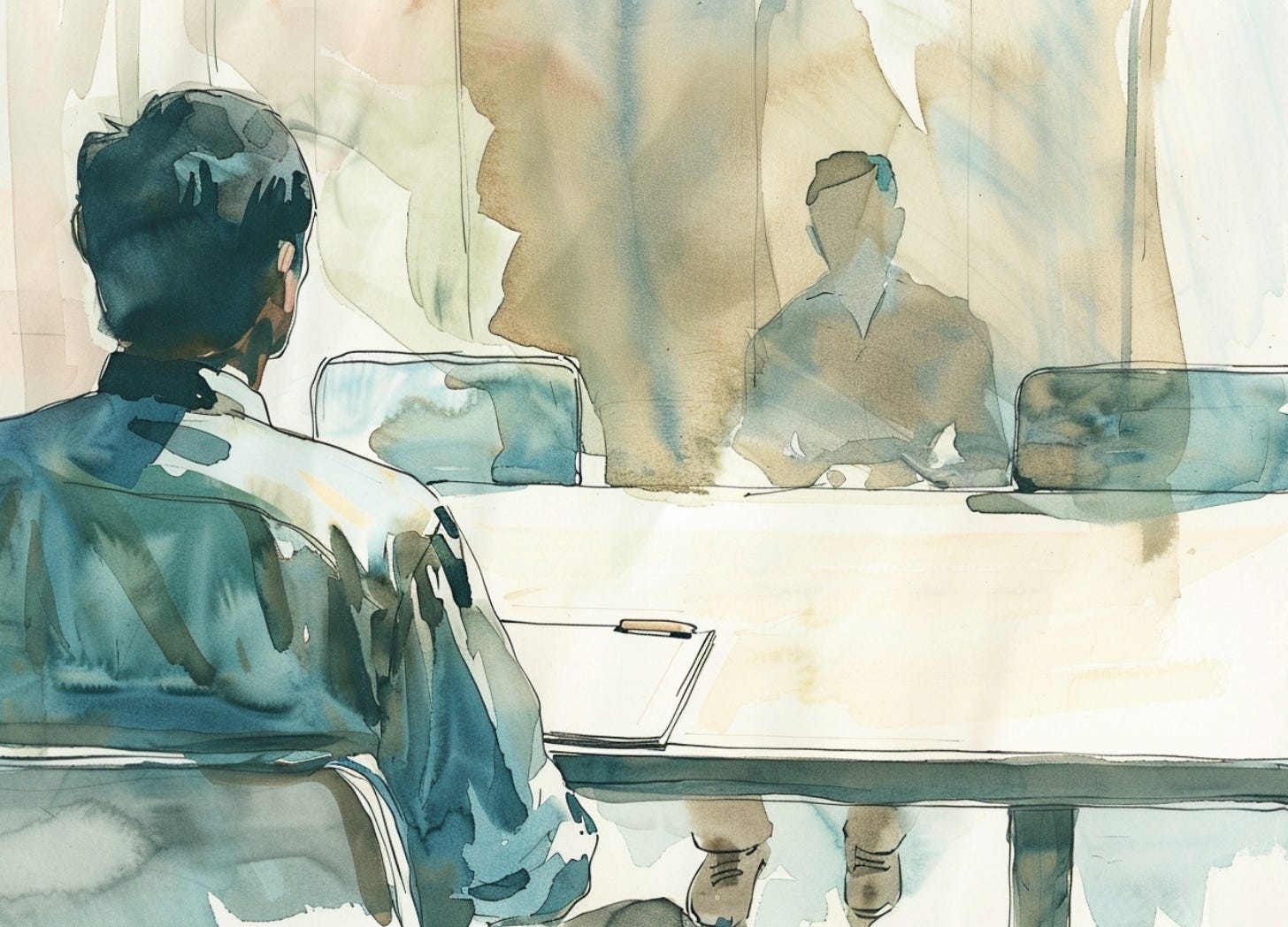
Location: Interview Room 2, Joliet Field Office
Conducting Agency: [redacted]
Recording Authorized, Cross-Jurisdiction Filing Code 41-B
Interviewer: For the record, please state your name, badge number, and current assignment.
Officer: Marek. Badge 4471. Statesville Correctional Center, Transfer and Classification Unit, since 2020.
Interviewer: Thank you. You are aware this conversation is being recorded.
Officer: I am.
Interviewer: And you understand that the transcript will be retained beyond the standard internal review window.
Officer: That wasn’t in my packet.
Interviewer: It is now.
A pause. Paper shifts.
Interviewer: Walk me through the night of the transfer.
Officer: Standard prep. Overnight detail. Crepes was on the manifest for transfer to Pontiac. Two-vehicle escort. Departure scheduled for 01:00.
Interviewer: Who briefed you.
Officer: My shift sergeant. Standard pre-transfer briefing at 23:45.
Interviewer: And the order itself. Where did it originate.
Officer: It came down through Classification.
Interviewer: From which desk.
Officer: I don’t know. It was already in the system when I clocked in.
Interviewer: Do transfer orders typically appear in the system between your shifts.
Officer: Sometimes.
Interviewer: How often.
Officer: I haven’t counted.
Interviewer: We have. This one was the third in eleven months that arrived without a routing signature.
Officer: I wasn’t aware.
Interviewer: I’m telling you now.
The officer adjusts his posture. The recording captures the sound of a chair settling.
Interviewer: Continue.
Officer: We pulled him from his cell at 00:32. He was already up.
Interviewer: Standing or seated.
Officer: Standing. Boots on. Jumpsuit fastened. He was at the door.
Interviewer: Was that unusual.
Officer: For most inmates, yes.
Interviewer: For him.
Officer: No.
Interviewer: How long had he been awake.
Officer: I don’t know. He didn’t sleep on a normal cycle.
Interviewer: Define normal cycle.
Officer: Most inmates settle in by 22:00. Quiet by 23:30. He stayed up later. He woke earlier. He didn’t seem tired during yard. I noticed.
Interviewer: Did you log it.
Officer: There isn’t a field for that.
Interviewer: There is. It’s on page four of the behavioral observation form.
Officer: I never used it.
Interviewer: Why not.
Officer: Because no one reads page four.
A pause.
Interviewer: Continue with the prep.
Officer: We restrained him per protocol. Wrist cuffs, ankle cuffs, transport belt. He was cooperative. He always was.
Interviewer: Did he speak.
Officer: He asked about the weather.
Interviewer: His exact words.
Officer: He said, is it still cold out there. I told him yes. He nodded.
Interviewer: That was the entire exchange.
Officer: Yes.
Interviewer: Had he asked about the weather before transfers.
Officer: Not that I remember.
Interviewer: He had not been transferred before.
Officer: Not since I’ve worked his unit.
Interviewer: Five years.
Officer: Five years.
Interviewer: Continue.
Officer: We escorted him through the corridor toward the sally port. Two officers in front, two behind. I was rear left. We took the standard route.
Interviewer: Define standard.
Officer: Out of D-block, through the secondary corridor, past intake processing, through the inner gate, into the staging bay. The transfer van was already positioned.
Interviewer: Was anyone in the staging bay who shouldn’t have been.
Officer: No.
Interviewer: You’re certain.
Officer: I’m certain of who I saw.
Interviewer: That isn’t the same answer.
Officer: It’s the answer I can give.
A longer pause. The recording captures the building ventilation.
Interviewer: At what point did you lose visual contact.
Officer: Inner gate. We staged him at the threshold while the second officer cleared the bay. Standard pause. Maybe four seconds. When I looked back, he was facing the wrong direction.
Interviewer: Toward what.
Officer: Toward the corridor we came from.
Interviewer: Was he restrained.
Officer: He had been.
Interviewer: Was he restrained at that moment.
Officer: The cuffs were on the floor.
Interviewer: How.
Officer: I don’t know.
Interviewer: They were intact.
Officer: They were closed. Both pairs. Like he stepped out of them.
Interviewer: Did you report that detail in your initial statement.
Officer: I reported that the restraints were recovered at the scene.
Interviewer: That isn’t the same statement.
Officer: No.
Interviewer: Why did you omit it.
Officer: Because I didn’t know how to write it down.
A pause. Paper shifts again.
Interviewer: Officer Marek, I want to ask you about a conversation that occurred on the morning of October 14th of last year.
Officer: I don’t remember the date.
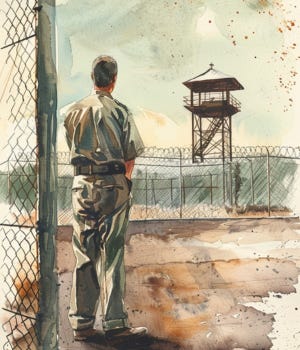
Interviewer: Yard rotation. You were posted at the southwest tower. Crepes approached the fence line during the second hour and spoke to you for approximately ninety seconds.
Officer: That happened.
Interviewer: What did he say.
Officer: He asked me how my mother was doing.
Interviewer: Had you discussed your mother with him before.
Officer: No.
Interviewer: Had you discussed your mother with anyone at the facility.
Officer: No.
Interviewer: Was your mother ill at that time.
Officer: She had been diagnosed eight days earlier.
Interviewer: Did you respond.
Officer: I told him to step back from the fence.
Interviewer: Did you log the exchange.
Officer: No.
Interviewer: Why not.
Officer: Because I didn’t know how to write it down.
The interviewer does not respond immediately. The recording continues.
Interviewer: Are there other exchanges you did not log.
Officer: Yes.
Interviewer: How many.
Officer: I don’t have a count.
Interviewer: An estimate.
Officer: Maybe half a dozen. Over the years.
Interviewer: All initiated by him.
Officer: All initiated by him.
Interviewer: All concerning information you had not shared.
Officer: Yes.
Interviewer: Did you discuss this with your supervisor.
Officer: No.
Interviewer: With your union representative.
Officer: No.
Interviewer: With anyone.
Officer: My wife once. Generally. Not by name.
Interviewer: What did she say.
Officer: She said it sounded like the kind of thing you don’t want to think about.
Interviewer: And.
Officer: And I stopped thinking about it.
A longer pause. The recording captures a faint mechanical sound from the hallway.
Interviewer: The visitor log for Crepes shows eight entries over five years. Seven are accounted for. One is not.
Officer: I don’t review the visitor logs.
Interviewer: The unaccounted entry occurred on March 3rd of this year. The signature is illegible. The escort officer on duty was you.
Officer: I escort visitors when I’m assigned to processing.
Interviewer: Do you remember this one.
Officer: I remember a man.
Interviewer: Describe him.
Officer: Tall. Dark coat. He moved like he wasn’t in a hurry.
Interviewer: Did he sign in.
Officer: He wrote something. I didn’t read it.
Interviewer: Did he show identification.
Officer: He showed something. I didn’t recognize the format.
Interviewer: Did you ask.
Officer: No.
Interviewer: Why not.
Officer: Because I didn’t think I was supposed to.
Interviewer: Who told you that.
Officer: No one. I just understood it.
The interviewer makes a note. The pen is audible.
Interviewer: Officer Marek, I want to be clear about the purpose of this interview.
Officer: All right.
Interviewer: You are not the subject of an investigation.
Officer: All right.
Interviewer: You are a documented observer.
Officer: I don’t know what that means.
Interviewer: It means your account has been entered into a record that is maintained outside the Department of Corrections.
Officer: By who.
Interviewer: By the office I represent.
Officer: Which is.
Interviewer: Cross-jurisdictional.
Officer: That’s not an answer.
Interviewer: It is the most accurate one available to you.
A pause. The officer does not respond.
Interviewer: You will return to your post tomorrow. Your schedule has not been altered. Your supervisors have not been notified of this conversation. You are not to discuss it with colleagues, family members, or representatives of the press.
Officer: And if I do.
Interviewer: The system will respond.
Officer: To me.
Interviewer: To the destabilization.
Officer: That isn’t the same thing.
Interviewer: It is functionally identical.
The chair shifts. The officer does not stand.
Officer: Can I ask one thing.
Interviewer: You may.
Officer: Was she part of this.
Interviewer: Define she.
Officer: The woman. On State Street.
Interviewer: She was a civilian.
Officer: That’s not what I asked.
Interviewer: It is the answer I can give.
The officer exhales. The recording captures it clearly.
Interviewer: Do you have any further questions.
Officer: No.
Interviewer: Thank you for your time. Your badge remains active. Your shift begins at 06:00.
Officer: Yes.
Interviewer: Officer Marek.
Officer: Yes.
Interviewer: You will continue exactly as before.
Transcript Ends
AUTHOR’S NOTE
at may season studio, we document the quiet mechanics that hold our world together, the routines, the tensions, and the moments that should not have happened but did anyway. this entry reflects another observation from within our walls.
written and designed by gintare okrzesik, creator of may season studio, a fictional corporation exploring beauty, bureaucracy, and quiet corruption through narrative design.
Filed Under: cross-jurisdiction records / from the may season studio employee files
Some things get documented.
Some things get filed outside the standard system.
Begin with:
Woman Killed Following Prison Escape Near State Street
State Street
What Remains
Then follow the trail.


Interesting how the State Street incident keeps weaving into the story line. Waiting to see if the furniture store or the holes are related. Love this.
The visitor omitted the parts of the meeting that would be remembered by the officer.